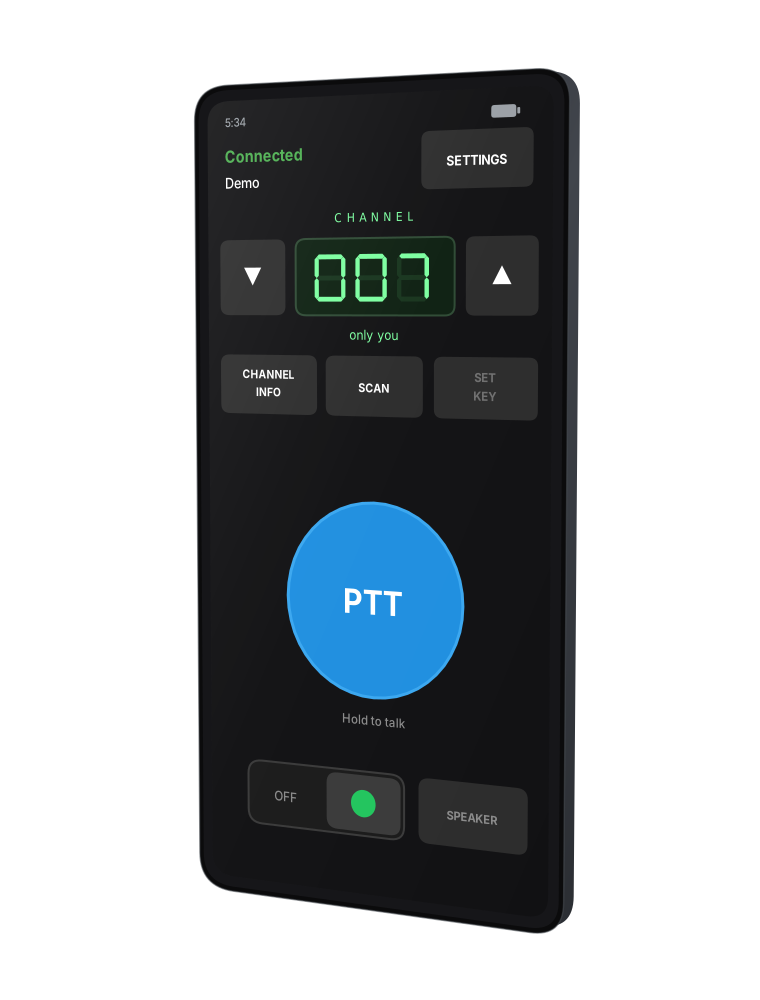
Press, talk, release — the way a radio works. No numbers to dial, no calls to accept, no group to set up first. Pick a channel and everyone on it hears you, whether they are in the next street or three provinces away.
Everything you expect from a radio, and the few things a phone can do better.
Hold the button and talk; let go and listen. Prefer not to hold it? Switch to toggle mode and one tap starts, another stops. The volume-down key and the hardware PTT button on rugged phones work too.
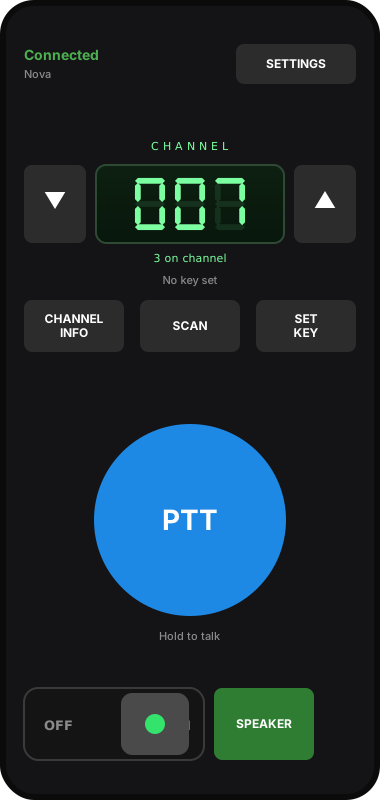
Step through them with the up and down keys, or tap the seven-segment display and type a number straight in. One person talks at a time, exactly like a real radio.
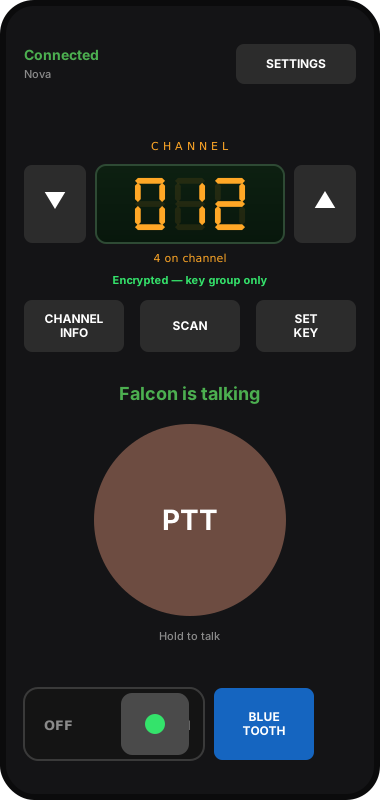
Green when the channel is free or you are talking, orange while somebody else has the floor, and a red flash if you press anyway. You never have to guess whether you got through.
Sweeps ten channels a second and stops where someone is talking. While scanning you are invisible: the app looks at each channel without joining it.
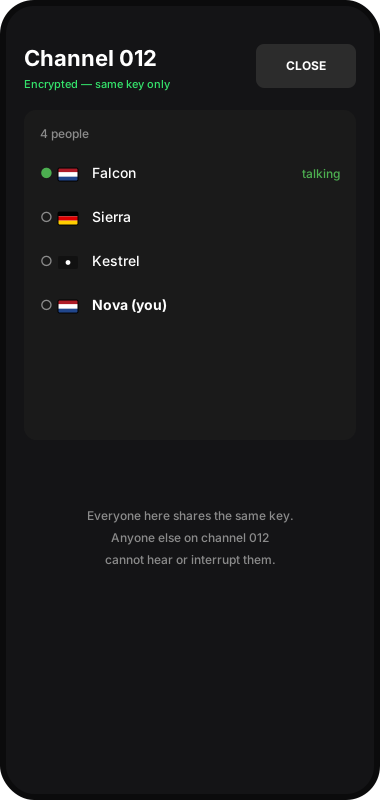
Set a key of four to twelve characters. Only people with the same key hear each other; everyone else on that channel cannot hear you and cannot interrupt you. The key never leaves your phone.
Speech is compressed to roughly 12 kbit/s. If the connection stumbles, the app drops to a lower bitrate by itself so the conversation keeps going instead of breaking up.
One button cycles the output. Loud on the speaker for a pocket radio, quiet on the earpiece when you hold it to your ear, or over a paired headset with its own microphone.
Two letters over the wire become a flag next to your nickname. Pick your own country, or fly something else entirely — the pirate flag is right there in the list.
Runs in the background with the screen off, so a call still reaches you. A single notification tells you it is on, and the on/off switch really does switch it off.
No sign-up, no email address, no password to forget. No advertising, no analytics and no trackers — there is nothing in here that follows you around.
The server splits itself into shards of 250 users and starts a new one when it fills up, up to ten thousand radios at once. Channels work across all of them, so a busy evening sounds exactly like a quiet one.
One app, one purchase, no subscription. Pro unlocks inside the app you already have.
Illustrations of the real screens, drawn from the app layout. They will be replaced by photographed screenshots before the store listing goes live.
Most apps tell you what they collect. These are the actual pages we look at, live, right now. We use them for one thing: keeping this server healthy and correctly sized.
Connections, traffic, processor load and a daily tally. Counts and graphs — no names of individuals, no history of who was where.
Who is on which channel at this second, and who is talking. Names appear only while that person is connected and vanish the moment they leave.
How the server is holding up: how many shards are running, on which ports, and what each one costs in processor time and memory. No names here at all.
The long version: what leaves your phone, what stays on it, what the server keeps, and where the limits of the encryption are.
Your voice is not recorded. It is relayed to the others on your channel and dropped. Nothing is written to disk and there is no playback.
Your details live only while you are connected. Nickname, channel and country exist in server memory; close the app and they are gone within seconds.
One file is written: a daily count of connections, kept for thirty days. A tally, not a record of people — no names, no channels, nothing pointing back to you.
Your IP address is used once to look up a country in a database on the server itself, and then let go. It is not stored, not logged and not shown anywhere.
With a key set, we cannot listen even if we wanted to. The audio is locked on your phone and unlocked on theirs; the server only moves bytes it cannot read. Without a key, treat a channel like an open radio — see the privacy policy for the honest limits.
Splitting the server changes none of this. Shards move audio between each other so a channel works across all of them, and they pass on frames without ever looking inside. The shard page shows processor time and memory, and no names.
Free, no account, and the Pro upgrade is there when you need more channels or a key.